KETNA PATEL ART STUDIO
'Raja Rani' Art tray
'Raja Rani' Art tray
Couldn't load pickup availability
Share
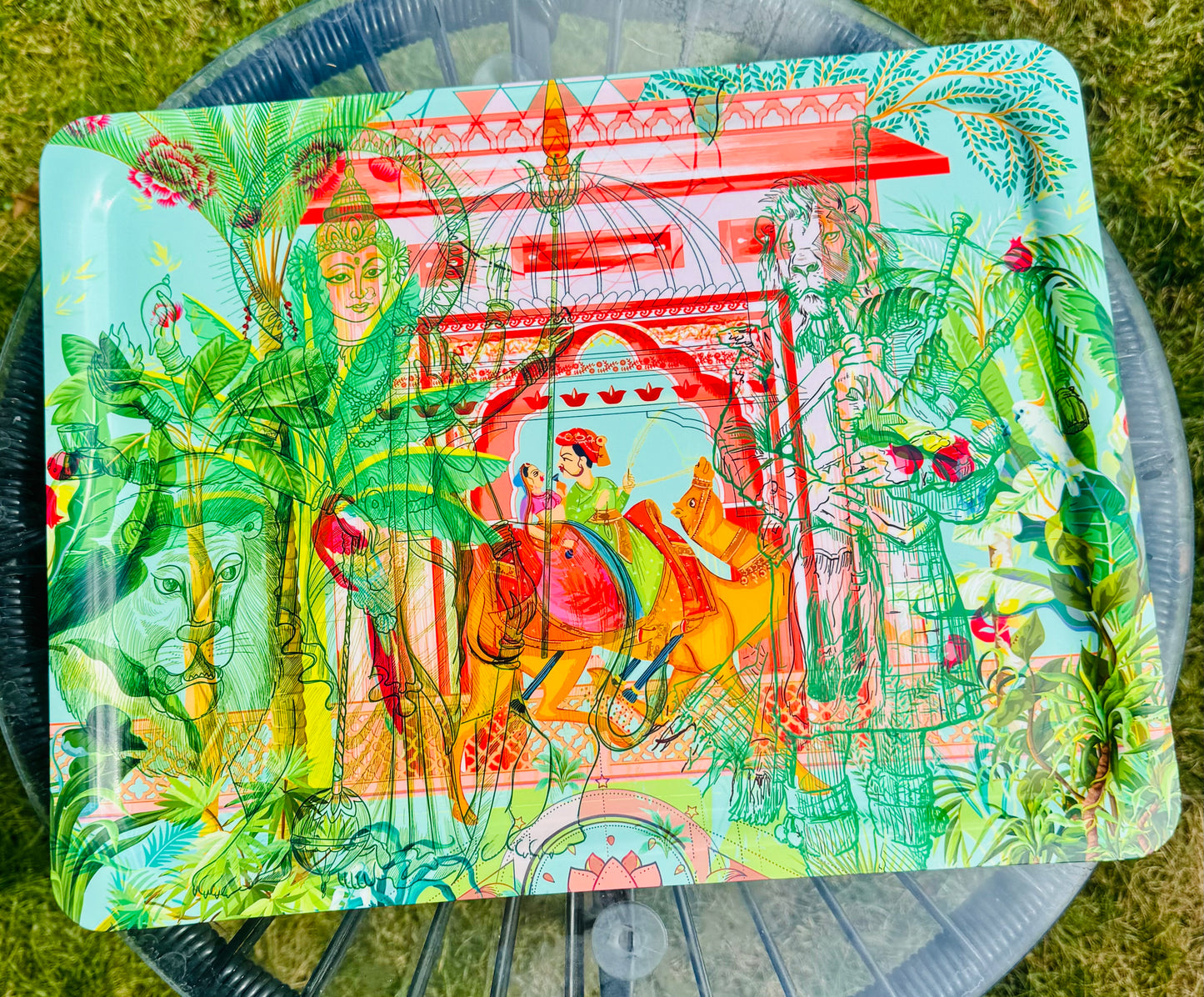
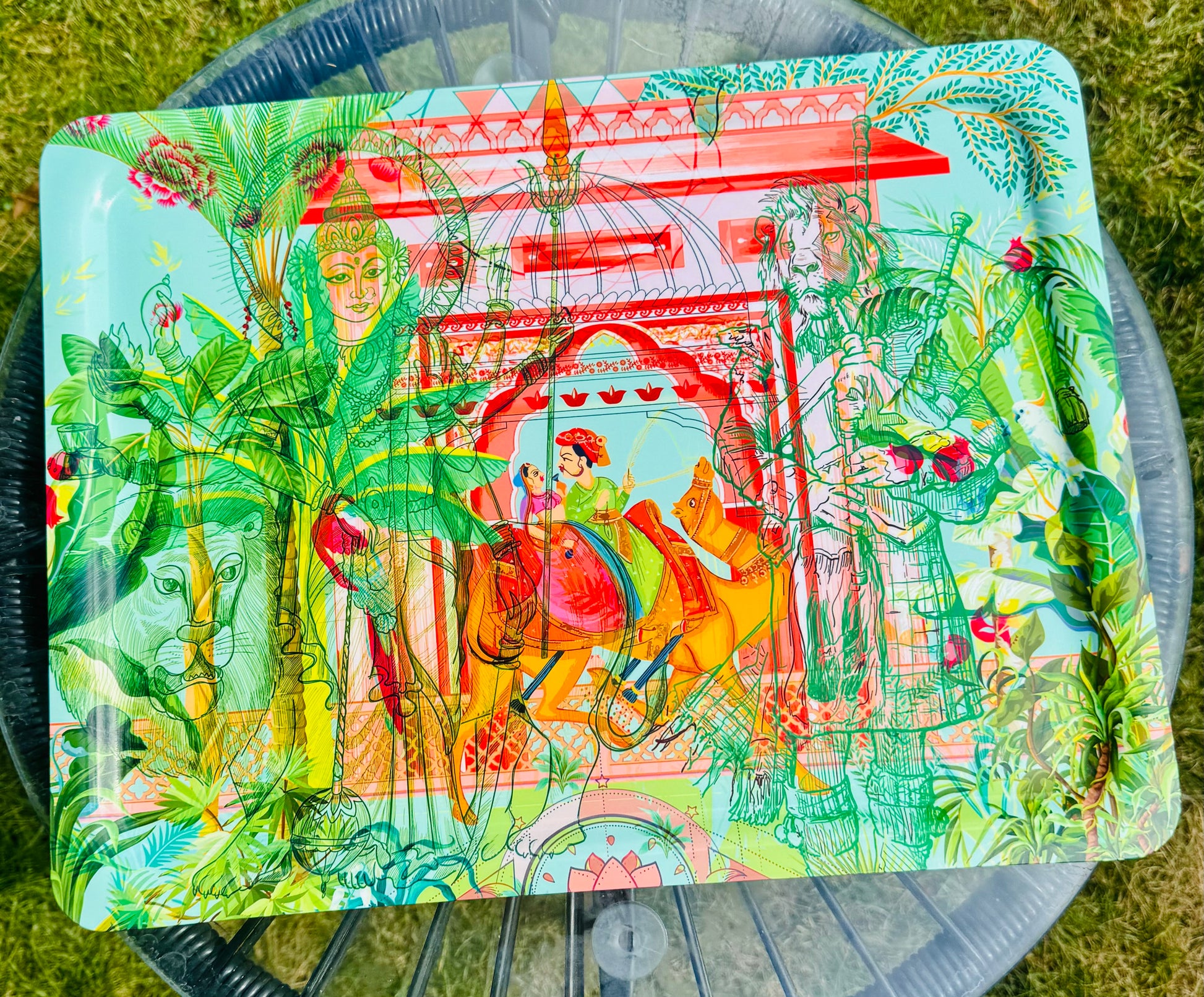
In Indian culture, we’re raised on the mantra “Atithi Devo Bhava” — guests are gods! So of course, a tray isn’t just a tray… it’s a conversation starter, a stage for chai, gossip, and grand ideas. My art trays take that ritual and remix it — turning the simple act of serving into a pop-art moment. Many collectors prop them up vertically on their console tables, showing them off like mini altars to everyday culture. It’s my way of sneaking art (and a bit of mischief) into the heart of your home — one serving at a time.
These collectible trays come straight from the artist's studio, offering a chance to own a unique piece of art at an accessible price. Each tray is made on order (so not mass produced!), handcrafted in the U.K., with the retail price set at double the production cost. This difference directly supports the artist's work and helps sustain her creative journey. Made from durable, scratch-proof melamine, these sturdy trays measure 43 x 33 cm—perfect for everyday use.
United Kingdom is a multicultural country. The London village (a.k.a a suburb) that I live in has in particular many Indians from East Africa (of which I am one). The Indian diaspora here mainly hails from Uganda, Kenya and Tanzania - all British colonies. Due to harsh living conditions following a drought, my grandfather was incentivized to migrate from Gujarat, India to Uganda a century ago. Over time, he was given a British passport and after Idi Amin - well the rest is history.
U.K and India share a remarkable commonality in their national symbols, both featuring ancient goddesses associated with lions. In India, we have Durga, who embodies feminine strength and valour, riding a lion or tiger as she vanquishes evil forces. In Britain, the symbol of the lion is closely tied to the heraldic imagery of the British monarchy, where lions often feature prominently in royal crests and standards.
This parallel between the two nations' symbols reflects a deeper connection, one that goes beyond geography and history. It underscores the cyclical nature of time, akin to the changing cycles of nature and seasons. Just as the seasons transition seamlessly from one to another, so too have the powers and influences in India's history shifted cyclically, from indigenous dynasties to the Mughal Empire and later to British colonial rule.
In this cyclical perspective, India's history, marked by periods of upheaval and transformation, mirrors the changing seasons of nature. The nation has endured and evolved, much like the delicate yet sturdy blossoms that emerge each year. This connection between India and Britain, embodied in their lion-associated goddesses and the cyclical patterns of time, serves as a reminder that history is not linear but, instead, a dynamic interplay of forces that repeat and evolve, much like the ever-changing seasons of nature.